
Coding
SQL Server 2012 introduced groundbreaking features that transformed database management. Whether you're optimizing performance, enhancing security, or streamlining administration, these 10 innovations redefine what’s possible in enterprise data handling.
AlwaysOn Availability Groups
Tired of database downtime disrupting your operations? AlwaysOn Availability Groups in SQL Server 2012 is the game-changer you’ve been waiting for. This feature replaces outdated database mirroring with a modern, enterprise-grade solution that keeps your critical workloads running smoothly—even during server failures.
With synchronous and asynchronous data replication, you can distribute your databases across multiple servers, ensuring high availability with minimal latency. The primary replica handles read/write operations, while secondary replicas stay in sync, ready to take over instantly. Whether you're running a mission-critical e-commerce platform or a financial system, this feature delivers near-zero downtime and seamless failover. 💪
Columnstore Indexes for Data Warehousing

Struggling with slow analytical queries on massive datasets? Columnstore indexes in SQL Server 2012 could be your game-changer. Unlike traditional row-based indexes, this feature stores data vertically, drastically reducing I/O and memory usage for complex aggregations and scans.
With Columnstore indexes, you can achieve 10x faster query performance on data warehouses by compressing data at the column level. They automatically handle batch mode processing, optimizing for analytical workloads like SUM, AVG, and GROUP BY operations. The best part? You can mix them with existing rowstore indexes for hybrid scenarios.
Perfect for data analysts, BI developers, and enterprises running OLAP workloads, this feature turns hours-long queries into seconds. 💡
Contained Databases for Security
Tired of security risks lurking in system-level permissions? Contained databases in SQL Server 2012 isolate everything—objects, metadata, even users—into self-contained units. This means fewer attack surfaces and no more relying on server-wide permissions that could expose your entire environment to a single breach.
With contained databases, you gain portability across environments (dev, test, production) without reconfiguring permissions. The feature also supports contained users, so logins are tied to the database itself, not the server. This simplifies administration while tightening security—perfect for multi-tenant or cloud-based deployments where isolation is critical.
Database administrators and security teams will love this for reducing complexity while boosting protection. It’s the ideal solution for environments where granular control and minimal trust boundaries are non-negotiable. ✨
Sequence Objects for Number Generation

Tired of rigid IDENTITY columns that limit your numeric value generation? SQL Server 2012’s Sequence Objects finally give you full control over how and where unique numbers are assigned—across tables, databases, and even applications.
With customizable increments (like starting at 1000 and stepping by 5), cycle detection to reset after max values, and support for multiple sequences per database, you can now generate IDs that align with your business logic—not just technical constraints. Plus, they work seamlessly with T-SQL functions like NEXT VALUE FOR, making integration effortless.
Perfect for developers managing multi-table workflows or applications needing consistent numbering across services, this feature eliminates the guesswork of legacy solutions. ✨
Windows Server Core Support
Tired of bloated SQL Server installations consuming unnecessary resources? Windows Server Core support in SQL Server 2012 delivers a minimalist, 60% smaller footprint than full GUI installations while maintaining full functionality.
This feature lets you deploy SQL Server on Windows Server Core—a stripped-down OS with no GUI overhead, just the essential components. Perfect for cloud deployments, it reduces attack surfaces by eliminating unnecessary services while improving performance in virtualized environments. The lightweight setup also cuts licensing costs and simplifies patch management.
Ideal for DevOps teams managing cloud-native databases or enterprises prioritizing security and efficiency, this feature transforms how SQL Server runs in modern infrastructures. 💻
Contained Database Users
Tired of juggling permissions across multiple databases? Contained Database Users in SQL Server 2012 lets you manage logins and roles inside individual databases, eliminating the need to sync with server-level security settings.
With this feature, you can create database-scoped users and assign fine-grained permissions (like SELECT, INSERT, or EXECUTE) without touching the master database. It’s a game-changer for multi-tenant environments, where each client’s data stays isolated with its own security model—no more cross-database permission conflicts or admin headaches.
Perfect for SaaS providers, hosting companies, or any team managing shared SQL Server instances. Simplify your workflow and keep security contained. ✨
SQL Server Data Tools (SSDT)

Tired of juggling separate tools for database development, source control, and deployments? SQL Server Data Tools (SSDT) bridges that gap with a single, powerful IDE designed specifically for database professionals. Built on Visual Studio, SSDT integrates seamlessly with Team Foundation Server (TFS) and Git, letting you version-control database schemas just like application code.
With schema comparison and synchronization, you can instantly identify and deploy differences between environments—whether it’s dev, test, or production. The built-in deployment pipelines automate workflows, reducing manual errors and speeding up releases. Plus, SSDT supports SQL Server projects with IntelliSense, debugging, and refactoring tools, making complex database tasks feel like second nature.
This is the go-to tool for database developers and DevOps teams managing enterprise applications. Whether you're maintaining a legacy system or building a cloud-native solution, SSDT’s unified workflow keeps your projects consistent and your deployments predictable. ✨
Power View for Interactive Reporting
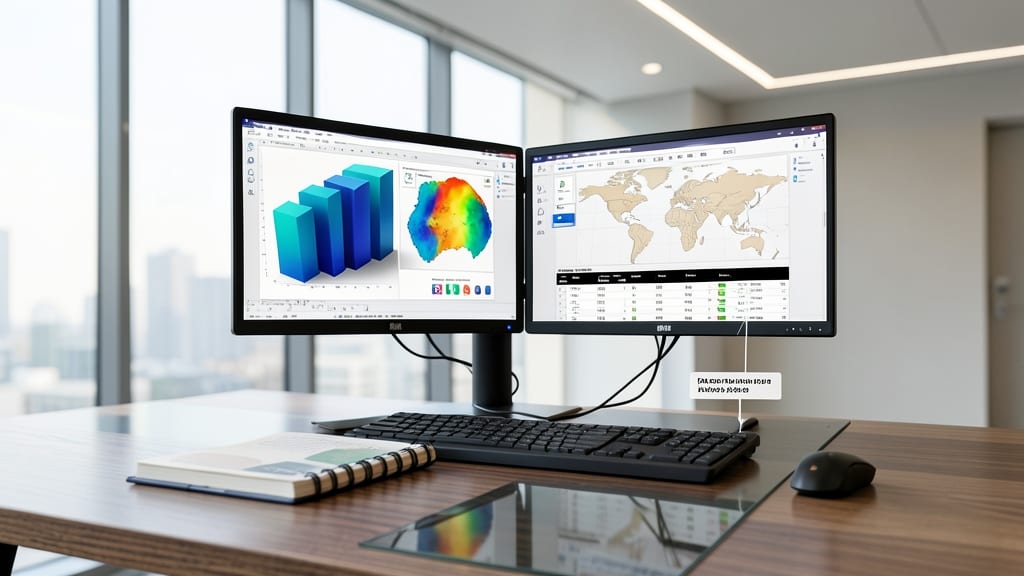
Tired of waiting for IT to generate reports or struggling with clunky BI tools? Power View brings interactive data visualization directly into Excel—no coding required. This game-changing feature lets business users drag-and-drop fields to create dynamic charts, maps, and pivot tables in seconds, turning raw data into actionable insights.
Power View integrates seamlessly with SQL Server 2012’s Tabular models and supports real-time filtering, drill-downs, and even 3D visualizations. Whether you’re analyzing sales trends or tracking KPIs, the tool adapts to your data structure while keeping the learning curve minimal. Best of all, it’s built into Excel 2013 Professional Plus, so no additional software is needed.
Perfect for analysts, managers, and decision-makers who need quick, visual insights without relying on IT. Say goodbye to static spreadsheets and hello to self-service analytics that scales with your business. ✨
Contained Database Authentication
Struggling to balance SQL Server logins and Windows authentication in the same environment? SQL Server 2012’s Contained Database Authentication finally bridges that gap—letting you mix both authentication modes within a single contained database. This flexibility means you’re no longer forced to choose between legacy SQL logins and modern Windows authentication.
With this feature, you can configure contained databases to support both authentication types simultaneously, giving administrators granular control over access. For example, internal teams might use Windows authentication for seamless SSO, while external partners rely on SQL logins for compatibility. The mixed-mode support extends to contained users, ensuring permissions stay database-scoped and isolated.
This is a game-changer for enterprise environments with hybrid authentication needs or multi-tenant deployments where flexibility is critical. 💻
SQL Server Data-Tier Applications (DAC)

Tired of manual database deployments that feel like herding cats? SQL Server Data-Tier Applications (DAC) package your entire database—schema, data, and even permissions—into a single, portable .dacpac file. This means you can deploy, version-control, and migrate databases as easily as swapping a software update.
With DACs, you get built-in versioning via SQL Server Data Tools, so upgrades become as simple as comparing and applying changes. The zero-config deployment works across environments, and you can even include sample data for testing. Best of all, DACs integrate with Team Foundation Server (TFS) or Git, letting your database code live alongside application code in source control.
Database administrators and DevOps teams will love this for consistent, repeatable deployments—no more "works on my machine" excuses. It’s the perfect tool for teams managing complex database schemas across development, staging, and production. 💻