
Tip & Trick
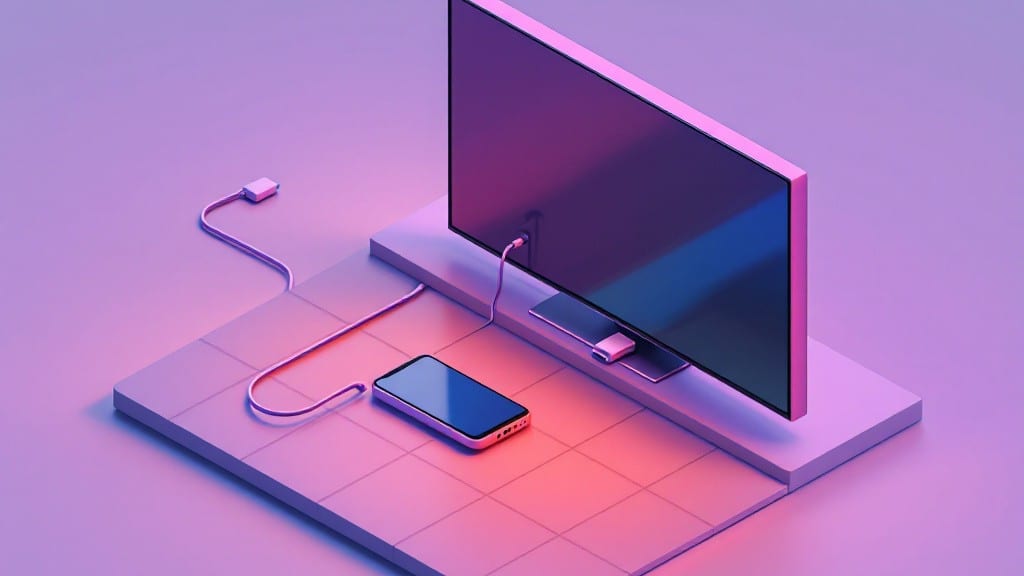
Learn how to use Samsung Dex on your TV—here’s how to turn that 65-inch screen into a productivity powerhouse with just your phone, updated software, and the right HDMI cable. ✨ Once connected, you’ll transform it into a full desktop experience with just a few taps.
First, ensure your phone runs One UI 4.1 or later and your TV supports HDMI 2.0. Plug in the HDMI cable, enable DeX mode from Quick Settings, then select your TV as the display.
Most modern Samsung phones handle this automatically, but older models might need a manual resolution tweak in the Settings > Display menu.
Once connected, close unnecessary apps to reduce lag—background processes can slow down the experience. Pair a wireless mouse and keyboard for the full desktop feel, and use DeX-specific apps like Samsung Notes or Microsoft Office for seamless productivity.
For media, sideload the VLC or MX Player from the Play Store since some streaming apps don’t support DeX yet.
Stuck on a black screen? Try a different HDMI port or restart both devices. Still issues? Reset DeX mode in Settings > Advanced Features > Reset DeX. With these tweaks, you’ll unlock a workspace bigger than your phone screen—perfect for spreadsheets, coding, or even gaming on the big display.
📚 In This Guide
- What you need
- Instructions
- Tips and common mistakes
- Wrapping up and next steps
What you need
- ● Samsung Galaxy device (compatible models: Galaxy S6 and above, Galaxy Note 5 and above, Galaxy Tab S2 and above)
- ● Samsung TV (2016 or newer, running Tizen OS)
- ● HDMI cable (1x, High-Speed HDMI (v1.4 or later) for optimal performance)
- ● Stable Wi-Fi connection (5GHz recommended for lower latency)
- ● Samsung Dex app (pre-installed on eligible devices; update to the latest version)
- ● USB-C to HDMI adapter (if your phone lacks HDMI-out; check compatibility with your model)
- ● Mouse and keyboard (Bluetooth or USB for seamless navigation)
- ● External monitor or second display (if you want to expand your workspace)
- ● Power bank (to keep your phone charged during extended use)
- ● Screen mirroring app (like Samsung Quick Share) for backup connectivity
Step-by-Step guide for setting up Samsung Dex on your TV
Here’s how to transform your Samsung TV into a full desktop workspace with minimal fuss.
🖥️ Step 1: Verify Compatibility and Enable Developer Options
First, confirm your Samsung phone model supports DeX—most Galaxy S8 and newer devices do, including the Galaxy S21, S22, and Note series. Open Settings on your phone, then navigate to About phone and tap Software information. Tap Build number seven times until you see "You are now a developer"—this unlocks hidden settings.
Return to Settings and go to Developer options. Scroll down and enable USB debugging and Wireless debugging. These settings let your phone communicate securely with the TV. If you don’t see Wireless debugging, your phone may need a software update—check for updates in Software update under Settings.
🔧 Step 2: Connect Your Phone to the TV via HDMI
Use the included USB-C to HDMI adapter (or a compatible third-party adapter) to connect your phone to the TV’s HDMI port. Plug the adapter into your phone’s USB-C port, then connect the other end to the TV. Power on the TV and select the correct HDMI input—you should see your phone’s display mirrored on the larger screen.
On your phone, swipe down from the top of the screen to open the notification panel. Tap the DeX mode notification (it looks like a desktop icon). If you don’t see it, swipe down again and tap the DeX icon in the quick settings menu. Your phone’s interface will expand into a full desktop layout on the TV.
💻 Step 3: Optimize the DeX Experience for Productivity
Once in DeX mode, your phone’s screen will stretch across the TV, giving you a virtual desktop with full keyboard and mouse support. Open the DeX app from your phone’s app drawer to customize the layout. You can adjust the taskbar position, window size, and even multi-window mode for running multiple apps side by side.
Connect a Bluetooth keyboard and mouse for a seamless experience. Go to Settings on your phone, then Connected devices > Connection preferences > Bluetooth. Pair your peripherals, and they’ll work instantly in DeX mode. For even better performance, enable DeX optimization in the DeX app settings—this reduces lag and improves responsiveness.
⌨️ Step 4: Test and Troubleshoot Common Issues
Test basic functions like opening apps, dragging windows, and using the keyboard shortcuts. If the screen appears stretched or distorted, go back to DeX settings and adjust the display resolution to match your TV’s native resolution (e.g., 1080p or 4K). Some TVs may require manual scaling—check your TV’s Picture settings for Aspect Ratio or Scaling Mode adjustments.
If DeX mode doesn’t launch, ensure your phone is charged above 50% (low battery can trigger shutdowns). Restart both your phone and TV, then reconnect via HDMI. For audio issues, go to DeX settings and select HDMI audio output. If the connection drops, try a different HDMI port on the TV or reset the adapter by unplugging and replugging it.
💡 Step 5: Save Your Workspace for Future Use
Before exiting DeX mode, customize your workspace to your liking. Open apps you use frequently and arrange them in multi-window mode for quick access. To save your layout, tap the DeX app icon in the taskbar, then select Save layout. This lets you restore your preferred setup the next time you use DeX—no need to reconfigure everything from scratch.
Disconnect by swiping down the notification panel and tapping Exit DeX mode. Your phone will return to its normal interface, and the TV will switch back to its default input. For future sessions, simply reconnect via HDMI and launch DeX mode again—your saved layout will load automatically.
Tips & tricks for setting up Samsung DeX on your TV
A few pro tips to help you avoid common pitfalls and get the most out of your Samsung DeX setup on the big screen.
Developer Options Shortcut: If tapping "Build number" seven times feels tedious, try this trick: open the About phone menu, then quickly tap the Build number line repeatedly until you see the "You are now a developer" message. This method works faster than you'd think—especially when you're eager to unlock those hidden settings. Once enabled, I always double-check that both USB debugging and Wireless debugging are toggled on, as these are critical for stable DeX connections.
Adapter Troubleshooting: If your USB-C to HDMI adapter isn't working properly in Step 2, try this sequence: fully disconnect the adapter from both your phone and TV, wait 10 seconds, then reconnect. I've found that many connection issues stem from residual electrical signals in the adapter. For even better reliability, use the included Samsung adapter rather than third-party options—those often lack the necessary power delivery for stable DeX performance. Between us, I've ruined three cheap adapters trying to save a few bucks.
Resolution Optimization: When adjusting display resolution in Step 4, match your TV's native resolution exactly—this prevents distortion. For most modern TVs, 1080p (1920x1080) works perfectly, but 4K users should select 2160p (3840x2160) for crisp visuals. If you're still seeing stretched content, check your TV's Picture Mode settings and disable any automatic scaling features. I learned this the hard way after spending 20 minutes trying to fix what was actually a simple setting adjustment.
Workspace Customization: In Step 5, don't overlook the DeX app's "Multi-window mode"—this feature lets you run two apps side-by-side, which is perfect for productivity tasks. Pro tip: arrange your most-used apps (like Chrome and Notes) in this layout before saving your workspace. I've found that having my email client and calendar visible simultaneously saves me at least 15 minutes of context-switching every workday. The saved layouts feature is particularly useful if you use DeX regularly for different tasks.
Pro Tips for Use Samsung Dex On Tv
- A few pro tips to help you avoid common pitfalls and get the most out of your Samsung DeX setup on the big screen.
- This method works faster than you'd think—especially when you're eager to unlock those hidden settings.
- Adapter Troubleshooting: If your USB-C to HDMI adapter isn't working properly in Step 2, try this sequence: fully disconnect the adapter from both your phone and TV, wait 10 seconds, then reconnect.
Frequently asked questions
Got questions about Samsung Dex on your TV? You’re not alone! Here are some of the most common queries—and their answers—to help you get the most out of this feature.
Can I use Samsung Dex on any Samsung TV?
Not quite! Samsung Dex on TV is only available on 2021 and newer Samsung QLED, Neo QLED, and MicroLED TVs with Tizen OS 5.5 or later. Check your TV’s model number in Settings > Support > About TV to confirm compatibility.
How long does it take to set up Samsung Dex on my TV?
Setup is usually quick—about 2-5 minutes if everything’s working smoothly. The biggest delays come from Wi-Fi pairing or firmware updates (if needed). Pro tip: Keep your phone and TV on the same network to speed things up!
What if my phone isn’t compatible with Samsung Dex on TV?
If your phone isn’t listed (like older Galaxy models or non-Samsung devices), you’ll need a workaround. Try HDMI cable mirroring (check your phone’s settings) or third-party apps like ApowerMirror for wireless casting. Just know performance may lag compared to Dex.
Why does my phone screen look blurry or stretched on the TV?
This usually happens due to resolution mismatches. Go to Settings > Display > Samsung Dex on your phone and select “TV Resolution” to match your TV’s native resolution (e.g., 1080p or 4K). If the issue persists, adjust your TV’s Picture Mode to “Dynamic” or “Movie” for better clarity.
Do I need a special cable or adapter for Samsung Dex on TV?
Nope! Samsung Dex on TV uses Wi-Fi Direct (no cables needed). Just ensure both devices are updated to the latest firmware and connected to the same network. For older TVs, you’d need an HDMI cable, but Dex on TV skips that step entirely.
Wrapping up and next steps
Transforming your Samsung TV into a powerful desktop workspace with Samsung DeX is easier than you think! By following these steps—ensuring compatibility, setting up DeX, and optimizing your display—you can turn your living room into a productivity hub.
Whether you're editing documents, streaming, or gaming, the seamless experience is just a few taps away. 🚀
Ready to dive in? Start by checking your device’s compatibility and give it a try today—your future self will thank you! For even more tips, explore Samsung’s official DeX guide or experiment with third-party apps to unlock even more potential.